- Budgeting
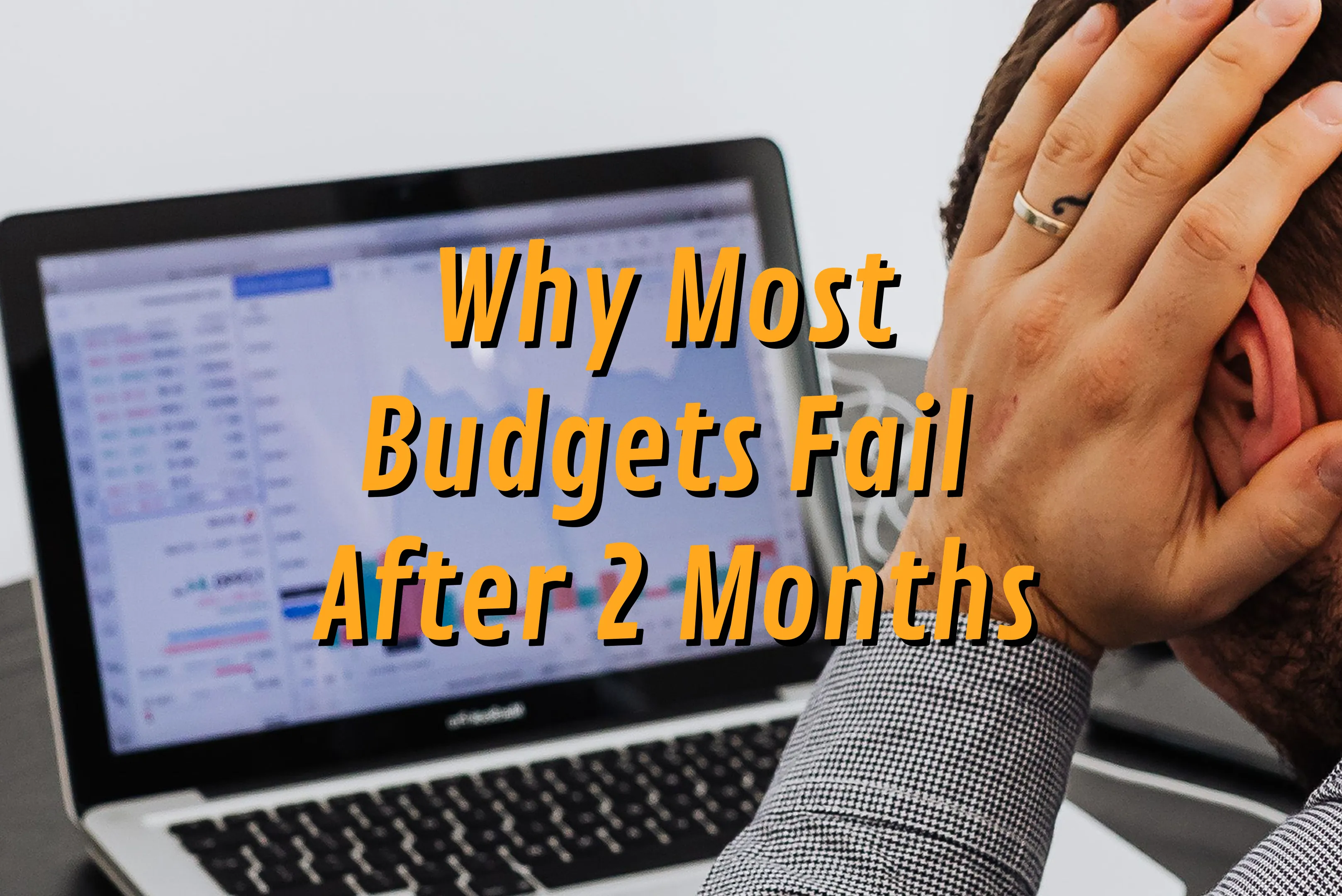
WHY MOST BUDGETS FAIL AFTER 2 MONTHS
|
Read time: around 4 minutes
If you’ve ever started a budget with enthusiasm in January only to forget about it by March, you’re not alone. The problem isn’t that you’re bad with numbers. It’s that most budgets are designed for people with predictable paychecks and stable expenses. Freelancers work in a different world. Money arrives late, in bursts or sometimes not at all. Expenses change from project to project. Traditional budgeting advice feels like forcing a square peg into a round hole.
Your first two months often go well because you’re motivated and your numbers happen to align. The trouble arrives in month three, when a client pays late or an annual software subscription renews unexpectedly. Suddenly your carefully balanced categories collapse and you abandon the budget entirely. Let’s look at why that happens and how to build something that actually lasts.
Built on Hope, Not Reality
Many freelancers craft their budget around their best month or an optimistic average. They look at a €5 000 month and decide that’s their new normal. Within weeks, reality contradicts the spreadsheet. A quiet month brings in €2 500 and every category is in the red. Unforeseen costs like equipment repairs or quarterly taxes blow up the plan. A budget rooted in hope rather than a conservative baseline is guaranteed to break.
Another common mistake is ignoring irregular expenses. Annual subscriptions, insurance premiums and tax payments don’t fit neatly into monthly boxes. If your budget doesn’t set aside money for these lumpy costs, they hit you like a surprise wave, washing away the rest of your categories. A sustainable budget starts with your lowest reliable income and includes sinking funds for anything that renews yearly or quarterly.
Too Static for a Dynamic Income
Most budgets follow a strict monthly rhythm: list income, subtract expenses, see what’s left. This works when paychecks land like clockwork. Freelancers, however, might get paid €1 200 one week, nothing the next and €3 000 at the end of the month. Trying to match irregular income to regular expense cycles is like timing the tide. A static budget fails because it doesn’t account for cash flow timing.
One way to solve this is to separate cash flow from spending decisions. Think of your income account as a reservoir. Every time money arrives, it goes there first. Once or twice a month, you pay yourself a fixed “salary” from that reservoir based on your baseline income. This removes the temptation to spend a big payment as soon as it arrives and smooths out lean weeks. It also makes your budget feel more like an employee’s, with predictable inflows that you control.
Budgets and Behaviour
Even the most beautifully designed budget will fail if it ignores how people actually behave. Budgets often act like crash diets: strict, rigid and doomed. When you overspend in one category, guilt kicks in. Instead of adjusting, many freelancers abandon the entire plan. Budgets also fail because they rely on willpower. You have to choose each day not to raid the business account for personal expenses. In high stress moments — like when a client finally pays — your brain craves reward, not restraint. Expecting willpower to override this is unrealistic.
The fix is to remove decisions from emotional moments. Automate transfers to savings and tax accounts the moment money hits your business account. Use a buffer fund so small overspends don’t feel like failures. Build in a “fun” category for occasional treats so you don’t binge after deprivation. Remember: a budget is a guide, not a punishment. It needs flexibility and room for error to survive past the initial honeymoon phase.
No Buffer, No Breath
Budgets collapse quickly without a cushion. If you budget down to the last euro and a client doesn’t pay on time, you either miss a bill or swipe a credit card. Both actions blow up your plan. A designer who needs €2 000 per month but has no emergency fund will panic when a €1 200 project payment is delayed. Their “budget failure” is really a cash flow failure.
A buffer fund equal to at least one month of expenses acts like a shock absorber. It gives you the breathing room to stick to your budget when income fluctuates. Move a portion of every invoice into this buffer before allocating the rest. When the buffer grows to three or six months, your budget becomes far less fragile. You’re no longer budgeting on a tightrope.
What Works in Practice
Start with your lowest consistent income over the last six to twelve months. Use that as your baseline. Build your budget around the essentials: housing, utilities, food, transport, insurance and debt payments. Anything beyond that — subscriptions, travel, education, fun — is funded only after the basics and savings goals are covered. If your income varies widely, create a separate sinking fund for irregular expenses like annual software renewals or taxes.
Separate your business and personal finances. Pay yourself a regular salary from your business account and transfer taxes to a dedicated account immediately. Automate these transfers so they happen without emotion. Track your spending weekly instead of monthly. A quick ten minute review every Friday helps you spot small problems before they become budget breaking crises.
Finally, adjust your budget every month. Freelancers don’t live in a static world. If a client drops off or you raise your rates, update your categories and percentages. A budget isn’t a once a year document; it’s a living system. The act of revisiting your numbers regularly keeps you engaged and prevents the two month burnout.
Common Pitfalls
One trap is treating leftover money as free money. After a €7 000 month, it’s tempting to splurge on gear or holidays. Without earmarking a portion for lean months and taxes, your budget will implode when the next month brings in €3 000. A better approach is to use percentages: decide in advance that 30 % of any payment goes to taxes, 30 % to business reserves and 40 % to your salary. The numbers can vary, but the principle of allocation stays constant.
Another pitfall is perfectionism. Some freelancers spend hours colour coding categories and designing intricate spreadsheets. When real life doesn’t match the plan, they feel they’ve failed. Simplicity beats complexity. A straightforward table of income and key expenses, updated regularly, will outlive a gorgeous template that’s too painful to maintain. Don’t let the pursuit of the perfect budget stop you from building a practical one.
Your budget should serve you, not the other way around. When built on a realistic baseline, supported by a buffer and allowed to adapt, a budget can survive beyond the two month mark and become a tool that guides, not frustrates.
If you find yourself struggling to budget on an inconsistent paycheck, How to Budget When You Don’t Know Your Next Paycheck can help you create a system tailored to truly unpredictable income.